I recently attended a webinar focused on brain health, Alzheimer’s disease, and dementia within the Hispanic community. While there was a lot of discussion about risk factors such as diet, diabetes, high blood pressure, and environment, one topic stood out to me above all others: trust.
As many of you know, my son Anthony has Down syndrome, which places him at a higher risk for dementia as he ages. Because of that, I pay close attention whenever experts discuss brain health and dementia prevention.
During the webinar, I asked why Hispanic populations are more susceptible to Alzheimer’s disease and dementia. The answer wasn’t simple. Diet, access to healthcare, diabetes, high blood pressure, social engagement, and environmental factors all play a role.
But what really caught my attention was the discussion about diagnosis.
The presenters explained that Hispanic individuals are often diagnosed later than other populations. By the time a diagnosis is made, opportunities for early intervention and support may have already been missed.
One reason is language access.
If health information isn’t available in your language, it’s harder to understand the warning signs. It’s harder to know what questions to ask. It’s harder to navigate a healthcare system that can already feel overwhelming.
But another important factor is trust.
Let’s be honest. Most of us don’t tell our doctors everything. We don’t always talk openly about our eating habits, our health concerns, or symptoms we’ve been noticing.
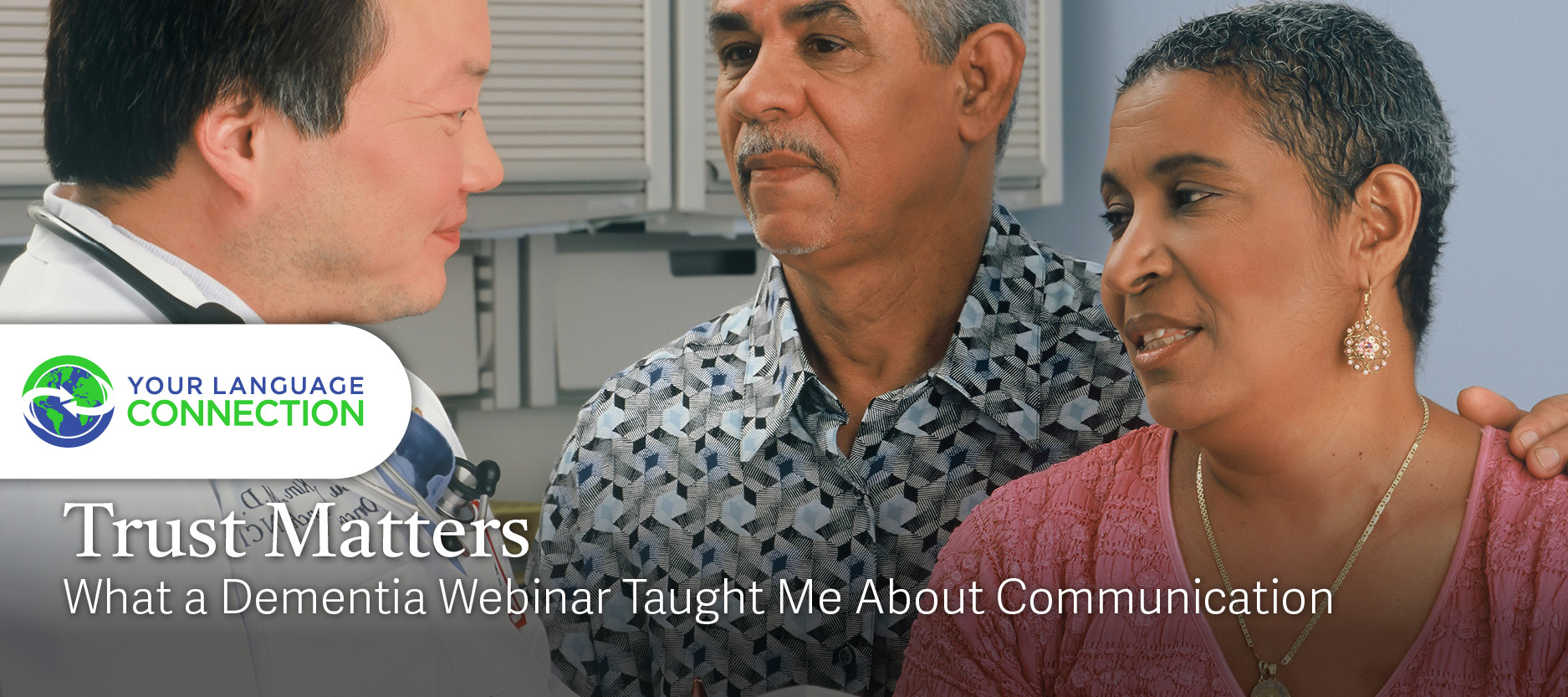
Now imagine having that conversation through an interpreter you’ve never met before.
Imagine discussing memory loss, confusion, or concerns about a loved one while trying to communicate in a second language.
That’s a lot to ask of someone.
The webinar also highlighted something we don’t talk about enough: dementia affects entire families, not just the person receiving the diagnosis. Spouses, children, and caregivers often become responsible for managing appointments, monitoring symptoms, and providing daily support.
Those family members need information they can understand and healthcare professionals they can trust.
This is one of the reasons language access is so important.
At Your Language Connection, we see every day how professional interpreters help bridge more than just language gaps. They help build understanding. They help people ask questions. They help patients and families participate in important healthcare decisions.
Technology can translate words, but trust is built through human connection.
Whether we’re talking about dementia, diabetes, disabilities, or any other healthcare challenge, people deserve communication that is clear, compassionate, and culturally appropriate.
Because sometimes the difference between getting help early and getting help late starts with a simple conversation and the trust to have it.